Meaning can be found in the most unlikely workplaces, unlikely at least until you look behind the scenes.
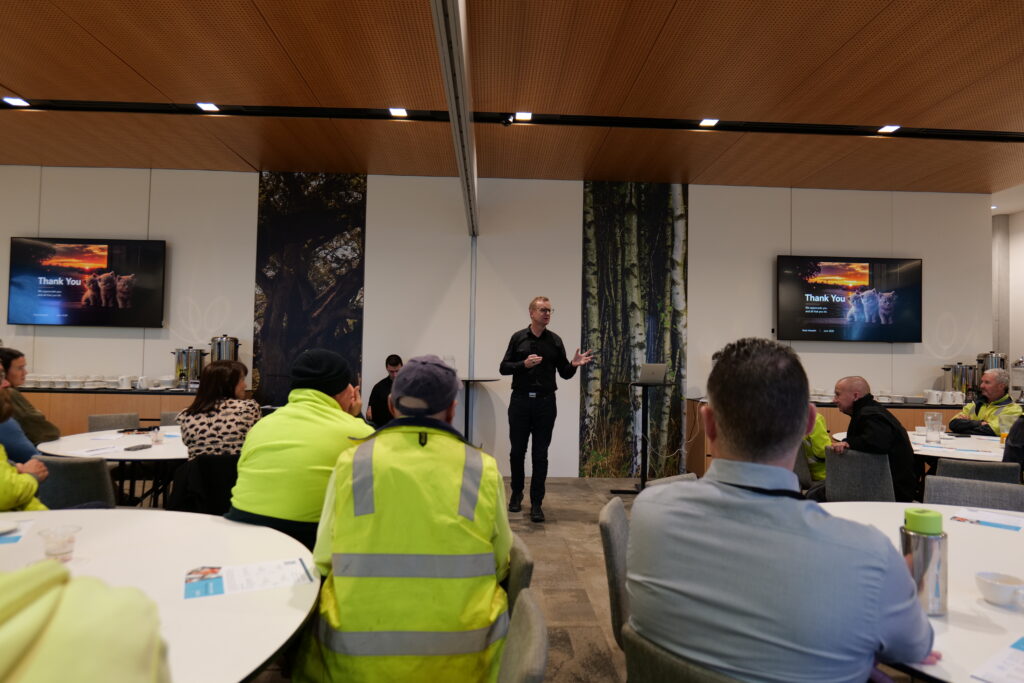
In June, I was invited to speak to a group of 200 workers at the Southern Metropolitan Cemeteries Trust in Melbourne. SMCT is responsible for the operation and upkeep of a number of Melbourne’s cemeteries, including the massive, and quite beautiful, Springvale Botanical Cemetery.
It might be fair to assume that few children dream of working in a cemetery one day. Yet some inevitably do, often finding their way there through professions such as gardening, logistics management, administration, and operations.
Springvale especially is a beautiful place to work. It occupies 422 acres of manicured gardens in Melbourne’s southeast, including Australia’s largest memorial rose gardens.
But cemetery workers are also regularly exposed to traumatic situations, even when that exposure is vicarious.
Few of us who have visited a cemetery would describe it as one of our best days. For many, it is one of our worst. Cemetery workers are present for those days, bearing witness to people in moments they might rather forget.
For some, such as the gardening teams, that might take place at a distance. For burial workers, it is much more personal. And for workers in the crematorium, they may be the last person to be in contact with someone’s loved one.
They might not have experienced the trauma of loss firsthand, but they see it in others every day, and hear the stories that come with it. Some are uplifting and heartwarming. Others are horrific.
My engagement with SMCT came as an invitation to address their team on the topic of accumulated trauma. While I am neither a psychologist nor a therapist, my own career has seen me bear witness to a number of traumatic events, and has brought me into close contact with people who deal with trauma regularly. My invitation was to share those stories, and what I had learned about how people manage trauma in their lives.
There are two things I have learned through my career that I believe are essential to managing trauma, whether that is the high-frequency, high-impact exposure of a first responder, or the lower-impact but still frequent exposure of the cemetery worker, the court officer, or the journalist.
The first is that how we respond to trauma is not just down to us. It is shaped by the structures around us.
That includes formal support mechanisms such as counselling, structured sharing sessions, and rostering that helps minimise exposure. It also includes the informal mechanisms of culture and peer support.
How we show up for others when they are experiencing trauma goes a long way towards helping them manage it. It may also create the environment we will need when the time comes that we require support ourselves.
The second is more personal. It flows from how we perceive our work, and our ability to find meaning in it.
Before speaking to the SMCT team, I spent time with many of them, getting to know how the cemetery operates, and more importantly, seeing how team members support each other.
This concept of meaning came through clearly.
Even when someone described themselves as “just a gardener,” they also acknowledged that keeping the grounds well cared for gives comfort to mourners, because it shows their loved one is being laid to rest in an environment where people care.
For those more closely associated with burial processes, knowing that how they show up can have a positive impact on mourners gives them a sense that they are helping others through one of the most difficult moments of their lives.
Rarely in my life had I given much thought to the operation of cemeteries, but it is a sector we will all inevitably come into contact with at some point.
I am grateful to have seen firsthand the care and effort that the people of SMCT put into their work, and into supporting each other, so that each of us who uses their services might gain some small comfort on a day that could never be considered one of our best.